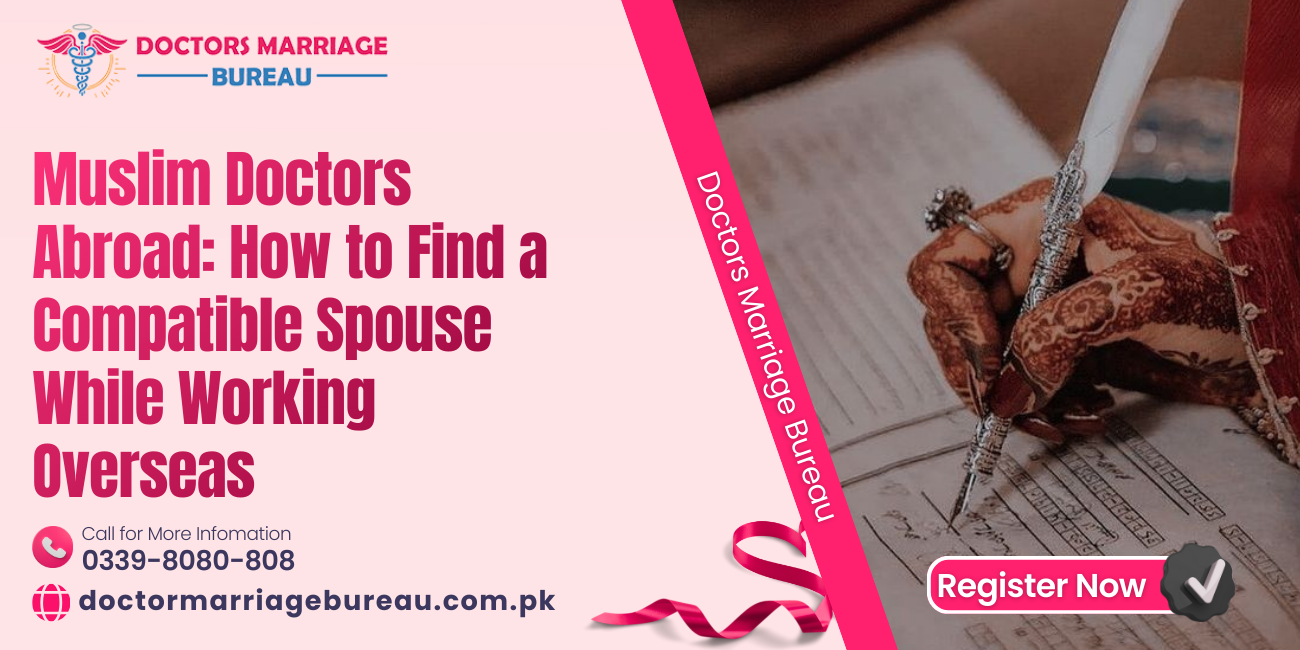
Muslim Doctors Abroad: How to Find a Compatible Spouse While Working Overseas
Introduction — The Unique Journey of Muslim Doctors Abroad
For many Muslim doctors, working abroad is both a dream and a challenge. From long working hours to cultural adjustments, the journey often brings professional success but also a deep sense of solitude when it comes to personal life. Finding a compatible Muslim life partner overseas requires balancing faith, career, and family expectations — all while maintaining one’s Islamic values in a foreign environment.
With verified matrimonial platforms, technology, and reliance on Dua and Tawakkul, it has become easier than ever to find the right spouse abroad — without compromising on Deen or professionalism.
The Reality of Muslim Professionals Living Overseas
Muslim doctors often migrate for education, specialization, or better opportunities in countries like the UK, Canada, the UAE, or Australia. However, the demanding nature of medical practice leaves little time for traditional matchmaking.
Common Challenges:
- Limited Muslim community or suitable prospects in their location
- Cultural and legal differences regarding marriage
- Maintaining modesty and Islamic ethics in a foreign environment
- Balancing work, worship, and personal life
Despite these challenges, Islam encourages believers to seek righteous partners wherever they are, as marriage completes half of one’s faith and provides emotional and spiritual stability.
The Islamic Perspective — Marriage as Half of Deen
The Prophet ﷺ said:
“When a person marries, he has completed half of his religion, so let him fear Allah regarding the remaining half.” (Bayhaqi)
This Hadith reminds Muslim professionals that marriage is not merely a social need — it is a spiritual act of worship. For doctors living abroad, the search for a compatible spouse is not just about convenience but about completing their faith with someone who understands their values, struggles, and ambitions.
Step-by-Step Guide to Finding a Compatible Spouse Abroad
1. Clarify Your Intentions (Niyyah)
Begin by renewing your intention — seek marriage for the sake of Allah, not merely out of loneliness or social pressure. A sincere Niyyah ensures Barakah (blessings) in every step that follows.
2. Identify Your Priorities
Make a list of essential qualities you seek in a spouse — Deen, profession, education, family values, and willingness to relocate. This clarity prevents confusion during the matchmaking process.
3. Use Verified Matrimonial Services
Online matrimonial platforms like Doctors Marriage Bureau are ideal for busy professionals abroad.
They:
- Verify every profile to ensure authenticity.
- Match based on profession, education, and faith.
- Maintain Islamic guidelines for privacy and modesty.
[Read Next: Verified Muslim Matrimonial Services: Why Professional Rishta Bureaus Are More Trusted → https://panel.doctormarriagebureau.com.pk/verified-muslim-matrimonial-services]
4. Involve Family Early
Even if families live in different countries, their involvement ensures cultural alignment and emotional support. Arrange video introductions and online family meetings when possible.
5. Perform Istikhara and Consistent Dua
Always seek Allah’s guidance when considering proposals.
“And it may be that you dislike a thing which is good for you, and that you like a thing which is bad for you. Allah knows, and you know not.” (Qur’an 2:216)
Through Istikhara and Dua, Allah guides hearts toward what is truly best.
Maintaining Islamic Values in a Foreign Environment
Living in non-Muslim societies can test one’s boundaries. Muslim doctors must prioritize modesty, avoid unnecessary mixing, and preserve Islamic manners in all interactions.
Tips to Maintain Faith:
- Join local Muslim associations or masajid for community support.
- Attend Islamic lectures or online Halaqas to stay spiritually connected.
- Ensure all communication during matchmaking remains halal and professional.
- Be cautious with social media and online interactions.
Emotional and Spiritual Challenges of Living Abroad
While professional life may be fulfilling, emotional solitude can be difficult. Many Muslim doctors face challenges like homesickness, cultural isolation, and longing for companionship rooted in shared values.
Overcoming Loneliness:
- Keep a consistent connection with family through video calls.
- Establish a daily spiritual routine — Salah, Quran recitation, and Dhikr.
- Volunteer in community health or charity work to build meaningful local bonds.
- Remember that Allah rewards patience, and the right partner comes at the right time.
“Indeed, with hardship comes ease.” (Qur’an 94:6)
How Islamic Matchmaking Differs from Western Dating Culture
Unlike Western dating, Islamic matchmaking emphasizes purpose, modesty, and family involvement. The goal is to form a halal, long-term relationship that strengthens faith, not temporary companionship.
Key Differences:
| Islamic Matchmaking | Western Dating |
|---|---|
| Faith-based and intentional | Casual or trial-based |
| Family involvement and transparency | Often private or informal |
| Clear halal boundaries | Open social interaction |
| Seeks long-term commitment | Focuses on personal compatibility |
Muslim professionals abroad often appreciate this structured approach because it respects both their cultural and religious identity.
Cultural Compatibility for Cross-National Muslim Marriages
Many Muslim doctors abroad marry across nationalities — Pakistani with Egyptian, Indian with Arab, or Bangladeshi with Indonesian. This diversity can be beautiful but requires strong communication and mutual respect.
How to Build Harmony:
- Learn each other’s cultural norms and traditions.
- Respect different food habits, languages, and customs.
- Keep Islam as the unifying foundation.
- Focus on shared values rather than cultural differences.
“The most noble of you in the sight of Allah is the most righteous of you.” (Qur’an 49:13)
Long-Distance Relationships After Engagement
Long-distance engagement is common for Muslim professionals abroad. However, maintaining emotional connection and trust requires intentional effort.
Islamic Guidelines:
- Keep communication modest and purposeful.
- Avoid unnecessary secrecy or private digital meetings.
- Stay patient and prepare for Nikah with mutual understanding.
- Keep parents involved to ensure transparency and blessings.
Tip: Schedule online Quran sessions together — this strengthens your spiritual bond while remaining within halal limits.
Why Verified Platforms Are Safer Than Social Media
Social media is often unsafe for rishta purposes due to fake accounts, unverified intentions, and lack of Islamic boundaries. Verified matrimonial platforms, on the other hand, provide:
- Profile verification through CNIC or professional ID.
- Filters for education, profession, and sect preferences.
- Privacy settings that protect personal details.
- Supervised communication under ethical guidelines.
Real-Life Success Stories: Muslim Doctors Who Found Love Abroad
Many success stories from Doctors Marriage Bureau prove that sincere intentions, verified services, and patience lead to happy marriages.
“Dr. Ayesha, a cardiologist from the UK, met Dr. Ahmed, an anesthesiologist from Dubai, through a verified Islamic platform. Their families connected online, and after Istikhara and mutual agreement, they had a beautiful Nikah — proof that faith and professionalism can go hand in hand.”
These stories inspire hope for Muslim professionals worldwide.
Final Reflections — Tawakkul in Every Step
Ultimately, the journey to finding a spouse abroad is a test of patience and trust in Allah’s plan. Efforts, Dua, and verified means are essential, but outcomes always rest with the One who knows best.
“And whoever relies upon Allah – then He is sufficient for him.” (Qur’an 65:3)
Whether you are a doctor in Canada, a surgeon in Saudi Arabia, or a researcher in the UK — your path to marriage is written. Trust Allah, use the right means, and believe that your soulmate is also praying to meet you.